You might be surprised to learn that not all whitening toothpastes deliver the same results. Their effectiveness largely depends on your individual tooth condition and the specific formulation used. While these products can brighten your smile, concerns about enamel damage and sensitivity linger. So, how do you choose a whitening toothpaste that works without harming your teeth? Understanding the key ingredients and their impact is crucial.
Effectiveness of Whitening Toothpaste
When you consider using whitening toothpaste, it’s essential to understand how effective it really is. Research indicates that these products can remove surface stains, primarily due to abrasive ingredients and mild bleaching agents.
However, their effectiveness varies based on the specific formulation and the initial condition of your teeth. While some users may notice a brighter smile within a few weeks, others mightn’t see significant results.
It’s crucial to align your expectations with scientific evidence, as whitening toothpaste isn’t a substitute for professional treatments. Additionally, you should monitor for any sensitivity, as prolonged use can affect tooth enamel.
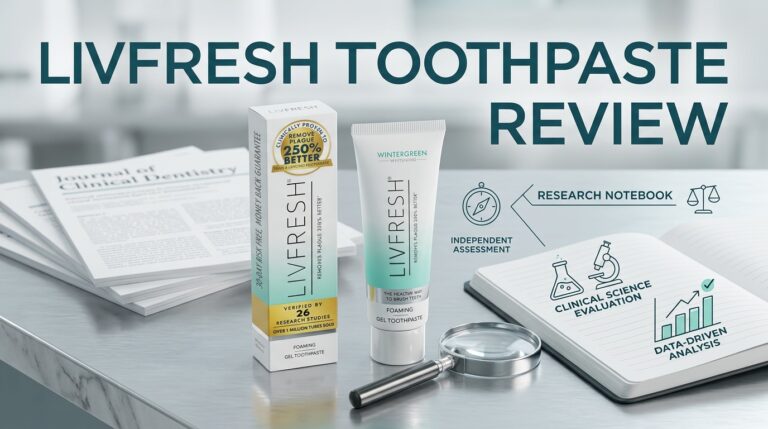
In serving others, guiding them toward informed choices about whitening options is key for maintaining oral health and achieving desired results. Notably, products like LivFresh are clinically proven to reduce gingival bleeding and provide a safer alternative for overall oral care.
How Does Whitening Toothpaste Work?
Understanding how whitening toothpaste works can help you make informed choices about your oral care. These toothpastes typically contain mild abrasives that gently scrub away surface stains from your teeth.
When you brush, these abrasives polish your enamel, enhancing your smile’s brightness. Additionally, some whitening toothpastes incorporate chemical agents that target deeper stains, effectively breaking down discoloration.
The combination of these mechanisms can lead to noticeable improvements in tooth color over time. However, it’s essential to remember that while they can lighten stains, they often don’t achieve the same results as professional whitening treatments.
Using whitening toothpaste consistently may help maintain your teeth’s brightness, contributing to overall dental health and confidence in your smile.
Key Ingredients in Whitening Toothpaste
While many people seek brighter smiles, knowing the key ingredients in whitening toothpaste can help you choose the right product.
Common active ingredients include hydrogen peroxide and carbamide peroxide, both of which effectively break down stains on your teeth. Abrasives like silica help physically scrub away surface discoloration.
You might also find polishing agents, which enhance the toothpaste’s stain-removing capabilities. Some formulations include fluoride to strengthen enamel and protect against cavities.
Additionally, natural ingredients like baking soda can provide mild whitening effects while being gentle on your teeth.
When selecting a whitening toothpaste, look for these components to ensure you’re making an informed choice that aligns with your oral health goals.
Is Whitening Toothpaste Safe for Your Enamel?
Choosing a whitening toothpaste involves not just understanding its active ingredients but also considering their impact on your enamel. Many whitening toothpastes contain mild abrasives and chemical agents designed to remove stains. While these can enhance your smile, excessive use may lead to enamel erosion.
Studies indicate that prolonged exposure to abrasive ingredients can compromise enamel strength, making your teeth more susceptible to decay and sensitivity.
To protect your enamel, opt for products approved by dental associations, and follow usage guidelines. Limiting use to a few times a week can also mitigate potential damage.
It’s essential to balance your desire for whiter teeth with the health of your enamel, ensuring you serve both your appearance and oral health effectively.
Alternatives to Whitening Toothpaste
If you’re looking for ways to brighten your smile without relying solely on whitening toothpaste, several effective alternatives can help.
Consider professional whitening treatments from your dentist, which often yield quicker and more noticeable results. You might also explore whitening strips or gels, which contain bleaching agents similar to those in professional treatments.
Natural options like baking soda can gently remove surface stains due to its mild abrasiveness. Additionally, incorporating more crunchy fruits and vegetables into your diet can aid in cleaning your teeth while promoting overall oral health.
Lastly, maintaining a consistent oral hygiene routine—brushing, flossing, and regular dental check-ups—ensures your smile remains bright and healthy. Always consult your dentist before trying new methods.
About the Author