If you’ve considered using charcoal toothpaste, you might be curious about its effectiveness and safety for your teeth. While it’s marketed as a natural whitening solution, the scientific evidence supporting these claims is limited. You need to be aware of both its potential benefits and risks, especially regarding enamel wear. So, is it really a good choice for your oral health? Let’s explore this further to uncover the truth behind charcoal toothpaste.
What Is Charcoal Toothpaste and How Does It Work?
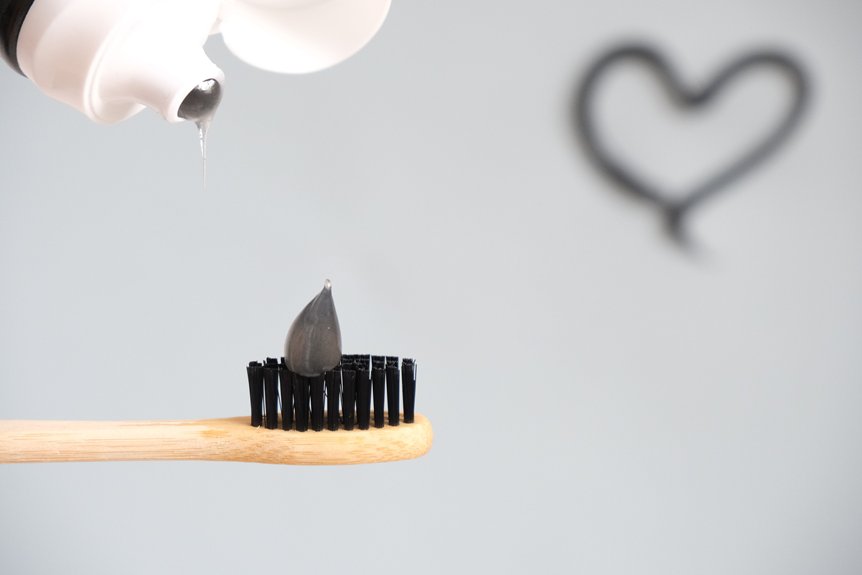
Charcoal toothpaste has gained popularity as a trendy dental care product, but what exactly is it? It typically contains activated charcoal, a form of carbon processed to make it highly porous.
This porous structure allows it to absorb impurities and toxins, which some proponents claim helps whiten teeth and freshen breath. While it’s believed that the charcoal can bind to stains on teeth, removing them during brushing, scientific evidence supporting these claims remains limited.
Most formulations also include traditional toothpaste ingredients like fluoride, which is essential for preventing cavities. Additionally, some brands offer evidence-based oral care solutions that prioritize overall dental health and effectiveness.
If you’re considering using charcoal toothpaste, it’s vital to choose a product that maintains your overall dental health while serving your needs effectively. Always consult with a dental professional before making changes to your oral care routine.
What Risks Should You Know About Charcoal Toothpaste?
While many people are drawn to the potential benefits of charcoal toothpaste, it’s important to be aware of the associated risks.
First, charcoal’s abrasive nature can wear down enamel, making your teeth more susceptible to decay. Studies indicate that frequent use may lead to increased tooth sensitivity and gum irritation.
Additionally, some charcoal products lack fluoride, which is essential for cavity prevention. There’s also the risk of staining; the charcoal can adhere to dental work and create discoloration.
Furthermore, the long-term effects of using charcoal toothpaste are still not well understood, so caution is advised.
If you’re considering it, consult your dentist to ensure it’s safe for you and aligns with your oral health goals.
Can Charcoal Toothpaste Really Whiten Your Teeth?
How effective is charcoal toothpaste for whitening your teeth? While charcoal toothpaste is marketed as a natural brightening agent, the evidence supporting its efficacy is limited.
Some studies suggest it can remove surface stains due to its abrasive nature, but this may also risk damaging enamel over time. Unlike traditional whitening products that contain hydrogen peroxide, which penetrates enamel to lift deeper stains, charcoal primarily works on the surface.
Additionally, the American Dental Association hasn’t endorsed charcoal toothpaste for whitening. If you’re considering it, remember that results can vary, and it’s essential to consult with your dentist. They can guide you on the safest and most effective whitening options tailored to your needs.
Key Benefits of Charcoal Toothpaste for Oral Health
Many people are curious about the potential benefits of charcoal toothpaste for oral health. While research is still developing, several key advantages have emerged. Charcoal toothpaste may help remove surface stains, freshen breath, and detoxify the mouth.
| Benefit | Description |
|---|---|
| Stain Removal | Charcoal may absorb and lift stains. |
| Breath Freshening | Activated charcoal can reduce odor. |
| Detoxification | It may help eliminate toxins in the mouth. |
| pH Balance | Charcoal can help maintain oral pH levels. |
| Natural Ingredients | Often free from harsh chemicals. |
These benefits can enhance your oral hygiene routine, making charcoal toothpaste an interesting option to consider. Always consult your dentist before making significant changes to your dental care products.
Charcoal Toothpaste vs. Regular Toothpaste
Charcoal toothpaste offers intriguing benefits, but it’s important to compare it with regular toothpaste to understand which might suit your needs better.
Regular toothpaste typically contains fluoride, a key ingredient that strengthens enamel and prevents cavities. In contrast, charcoal toothpaste claims to whiten teeth and absorb toxins, but scientific support for these claims is limited.
While charcoal may help remove surface stains, its abrasive nature can potentially wear down enamel over time. If you’re looking for comprehensive oral care, regular toothpaste is often recommended by dental professionals for its proven benefits.
Ultimately, your choice should align with your dental health goals, balancing aesthetic desires with effective care. Always consult with a dental expert to make the best decision for your unique needs.
Dental Experts Weigh In on Charcoal Toothpaste
While some people are drawn to charcoal toothpaste for its trendy appeal, dental experts often highlight the potential risks associated with its use.
Many professionals express concerns about the abrasiveness of charcoal, which can erode enamel over time, leading to increased tooth sensitivity and decay.
Additionally, charcoal may not effectively remove plaque or prevent gum disease, as traditional fluoride toothpaste does.
Experts advise that while charcoal toothpaste might offer a temporary whitening effect, it shouldn’t replace your regular dental hygiene routine.
They recommend consulting with a dentist before trying charcoal products, especially if you have existing dental issues.
Prioritizing evidence-based practices ensures you’re serving your oral health—and that of others—effectively.
How Often Should You Use Charcoal Toothpaste?
How often should you incorporate charcoal toothpaste into your routine? Dental professionals recommend using it sparingly—ideally, no more than once or twice a week.
While charcoal toothpaste can help with surface stains, overuse may lead to enamel erosion and increased tooth sensitivity. It’s essential to balance its use with fluoride toothpaste, which strengthens enamel and protects against cavities.
If you’re considering charcoal toothpaste, pay attention to how your teeth and gums respond. If you notice any discomfort or increased sensitivity, it’s best to reduce usage.
Always consult your dentist for personalized advice tailored to your dental health. Prioritizing your overall oral care routine will ensure you’re serving not just your teeth, but your long-term well-being.
Effective Alternatives to Charcoal Toothpaste for Whitening
Are you looking for effective ways to whiten your teeth without using charcoal toothpaste? Consider options like hydrogen peroxide, which can effectively remove stains and brighten your smile.
Many over-the-counter whitening toothpastes contain baking soda, known for its mild abrasive properties that help lift surface stains. Additionally, professional whitening treatments, offered by dentists, provide more dramatic results using stronger bleaching agents.
You might also explore natural alternatives like activated coconut charcoal or turmeric, both of which have gained popularity for their stain-fighting abilities.
Lastly, maintaining good oral hygiene—brushing twice daily and flossing—can prevent discoloration and keep your teeth looking their best. These options can help you achieve a brighter smile while being gentle on your enamel.
Is Charcoal Toothpaste Right for You?
Exploring alternatives to charcoal toothpaste raises the question of whether charcoal toothpaste itself is a suitable choice for your oral care routine.
While it may seem appealing for its whitening properties, evidence suggests it can be abrasive, potentially harming enamel over time. If you have sensitive teeth or gum issues, you might want to steer clear.
Moreover, charcoal toothpaste often lacks fluoride, an essential ingredient for preventing cavities.
If you’re committed to serving others, consider recommending safer, evidence-backed alternatives that maintain oral health without compromising safety.
Ultimately, the decision should reflect your needs, preferences, and any specific dental concerns. Consulting with a dentist can also provide tailored advice to ensure you make the best choice for your oral care.
About the Author